Congratulations! You’ve landed an interview and are one step closer to hopefully receiving a job offer. This is where the work begins. One of the most important aspects of preparing for an upcoming interview is research. To present confidently and maintain a steady two-way conversation with your interviewer, you need to put that knowledge to work.
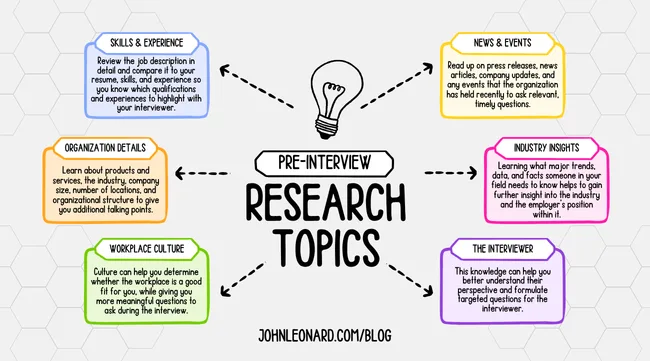
Before your interview, make sure you can confidently speak to the following:
Skills & Experience
Before you even start to delve into information about the organization, you need to know what they’re looking for in a candidate for this particular role. Review the job description in detail and compare it to your resume, skills, and experience so you know which qualifications and experiences to highlight with your interviewer. Identify the top 3-5 qualifications and role responsibilities, and prepare anecdotes that provide evidence of your ability to do the job.
Once you understand what this particular role requires, look at other positions on the organization’s website to get a broader sense of the skills and qualities they value in candidates overall. Take it one step further and look at current employees on LinkedIn to see the skills they possess and responsibilities they handle on a daily basis.
Organization Details
The next step is to focus on the organization itself. Learn about its products and services, as well as basic details such as the industry it’s in, company size, number of locations, organizational structure, and more. It’s also significant to know about any awards, recognition, or accomplishments the organization has received. This can help you learn more about its reputation while giving you additional talking points during your interview.
These are questions you should be able to answer about the organization:
- When were they established?
- Are they privately or publicly owned?
- Where are they based, and how many offices do they have?
- How many employees do they have?
- How has their workforce changed over the years?
- Who is their leadership team?
You can obtain this information through LinkedIn, a Google search, Glassdoor, the organization’s social media, or the “About” page on their website.
Workplace Culture
A pivotal aspect of researching an organization is understanding its culture. This can help you determine whether the workplace is a good fit for you while giving you more meaningful questions to ask during the interview, rather than simply asking, “What is the culture like at this organization?”
Take some time to review the organization’s website and blog, as well as its mission and values. You can also review company ratings and reviews on Glassdoor, Indeed, and Google. Another method is to reach out to a current employee on LinkedIn to gather more information about the organization’s culture. This can be a good introduction and continue to demonstrate your interest in working there.
Latest News & Events
Once you understand the organization’s background and culture, take your research one step further by looking at what’s happening there right now. In order to keep a conversation going in an interview, it’s crucial to know the most recent news about the employer. Read up on press releases, news articles, company updates, and any events that the organization has held recently.
Go to their social media pages and follow them so you can stay up to date on information directly from the source. It’s important to know this type of information so you can reference it during your interview and ask timely, relevant questions.
Industry Insights
It’s not just enough to research the potential employer; you also need to know the latest information about the industry itself. What are the major trends, data, and facts someone in your field needs to know? You may already be familiar with some of this information, but it never hurts to expand your knowledge. You can also research competitors of the organization you’re interested in working for to gain further insight into the industry and the employer’s position within it.
The Interviewer
Lastly, you must know about the person you’re speaking with. This knowledge can help you better understand their perspective and formulate targeted questions for the interviewer. The last thing you want is to start asking technical questions about the role when you’re speaking to someone in HR!
Knowing their title, what they do, and how long they’ve been with the organization opens the door to unique and thoughtful questions, leaving a strong impression. Check out their LinkedIn page and company bio to obtain these insights.
The goal isn’t to memorize every detail about an organization. It’s to know enough that you can have a thoughtful, informed conversation about the role, the organization, and how your experience can contribute. It does take time and effort to learn all of the necessary information, but the preparation will expand your knowledge and help you feel more confident when it’s time for your interview.
Interested in other ways to land your next job? Subscribe to the JOHNLEONARD blog below to receive more advice to help with your job search.
This blog was originally written by Erin Bazinet and has been updated for content.