


Starting in professional office environments early in your career can feel intimidating, especially when you’re looking for ways to stand out and differentiate yourself from your peers. The reality is: career growth doesn’t happen overnight.
Several years ago, I started my career at JOHNLEONARD fresh out of college and have since grown into my current role as Lead Consultant of our Direct Hire Division. Over the years, I’ve learned that career growth is about more than simply doing your job well. It’s about seeking opportunities to contribute and add value, supporting those around you, and being willing to take on additional responsibilities before being asked.
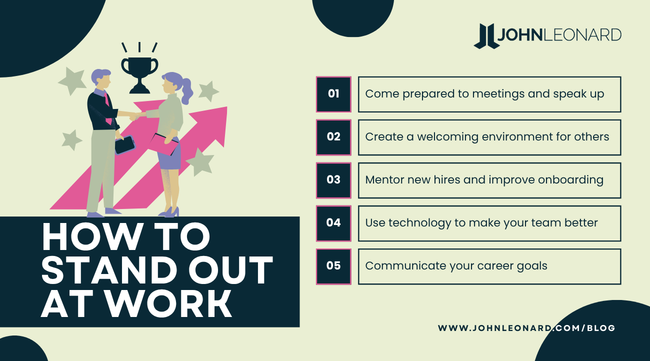
There’s no exact formula for career advancement, but small, consistent actions can lead to bigger opportunities. Don’t wait for a promotion to start demonstrating leadership. Here are five strategies I recommend.
1. Come Prepared and Speak Up
One of the simplest ways to make an impression is to come prepared to meetings and contribute thoughtfully. You don’t have to be the person who speaks the most. Instead, focus on making meaningful contributions.
Ask thoughtful questions, share relevant insights, and offer solutions when appropriate. Preparation and confidence can help leadership recognize the knowledge you have mastered and your potential ability to contribute beyond your immediate responsibilities.
Your body language and energy also matter throughout a meeting or event. Showing up with a positive attitude, maintaining an engaged presence, and demonstrating genuine interest can set you apart from those who appear disengaged or uninterested. Small changes in how you present yourself can make a lasting impression on leadership and your colleagues.
2. Create a Welcoming Environment for Others
Leadership isn’t always about managing people. Sometimes, it’s about making those around you feel supported, welcomed, and included.
When someone new joins your team, invite them to lunch, show them around the neighborhood, and introduce them to colleagues. These small gestures help new hires understand the workplace culture beyond formal onboarding and feel more comfortable in their new environment.
Being a natural leader means recognizing opportunities to uplift others and making that a priority, regardless of your title.
3. Mentor New Hires and Improve Onboarding
Once you become comfortable in your role, look for opportunities to help others get there faster.
Offer to mentor new hires or become a resource they can turn to when they have questions. Drawing from your own training experience, share constructive feedback with leadership about what worked well and where there may be room for improvement.
Perhaps certain information could be better organized, or new employees would benefit from a checklist, training guide, or more structured introduction to the team. Consider how you can contribute to making the onboarding process more efficient and effective.
Rather than simply identifying what isn’t working, look for ways to help solve the problem. That shift from recognizing a challenge to taking action is one of the clearest ways to demonstrate initiative.
In recruitment, as in many other industries, success is often shared, and responsibilities can overlap, making collaboration essential. Taking the time to support your colleagues and help them succeed ultimately strengthens the entire team.
4. Use Technology to Make Your Team Better
Technology should be more than a tool for completing your own responsibilities. Look for ways it can help your entire team work more efficiently.
Pay attention to new tools, platforms, automation opportunities, and processes that could improve onboarding, communication, organization, or productivity. When you discover something that could benefit the team, take the time to learn how it works, understand its value, and share it with your colleagues.
If others are struggling with a new system or process, offer to help guide them through it. You don’t have to be a technology expert to make a difference. What matters is being willing to learn, share your knowledge, and help your team adapt.
One example from my own experience was discovering a free PDF conversion tool that I shared with my colleagues. It quickly became a resource our entire team adopted, demonstrating how even a small discovery can make a difference in everyone’s day-to-day work.
5. Communicate Your Career Goals
You cannot assume management knows you are ready for the next step or interested in advancing your career. Leadership cannot support a career path they don’t know you want to pursue.
Take a look at your company’s structure. What title comes next? Where do you want to be in five years? Is there a clear progression of roles, and what steps do you need to take to get there?
When you can clearly connect your accomplishments, expanded responsibilities, and measurable results to the expectations of the next-level role, you give your manager a meaningful foundation for that conversation.
Most importantly, keep track of what you accomplish. These are legitimate examples of your growth and contributions that you can reference during performance reviews and conversations about career advancement.
The small things you do consistently can build a professional reputation that extends far beyond any job description. Again, there is no single formula for career advancement. What works in one company may look different in another, and every career path is unique.
But one principle remains consistent: start demonstrating the qualities of the next level before you receive the title.
Subscribe to The JOHNLEONARD Blog to receive career advice, resume tips, and interview strategies straight to your inbox.