
In hiring, first impressions matter, and the first representation of you and your work is your resume. Most employers spend only a few seconds scanning a resume before deciding whether to keep reading. With such a quick initial test, it’s worth asking: Does your resume attract readers? Many resumes are rejected before a hiring manager reads past the first few lines. This is not because candidates lack skills, but because the opening fails to capture attention. A strong resume headline helps solve this problem by clearly stating your professional focus right away. It tells employers what you do, what skills you bring, and how you are relevant to the role.
The information at the very top of your resume is critical. One of the easiest and most effective ways to stand out is by including a strong resume headline. A well-written headline immediately tells hiring managers why your resume deserves their attention. A resume headline is a short phrase placed at the top of your resume, typically right under your contact information. It summarizes your professional identity and highlights the value you bring to a role. Think of it as the title of your resume. In just one line, it communicates your expertise, experience level, or key strengths.
Examples of resume headlines include:
Marketing Graduate | “Social Media Strategy & Content Creation,” “Entry-Level Data Analyst | Excel, SQL & Data Visualization,” and “Customer Service Specialist | Conflict Resolution & Client Satisfaction.”
These headlines are designed to be brief and impactful, helping employers quickly understand your background.
Creating an effective resume headline is easier when you follow a simple structure.
- Start with your professional identity by using your job title. This immediately tells employers what type of role you are seeking. Examples might include Graphic Designer, Business Analyst, or Education Coordinator.
- Next, add experience, credentials, or career level to provide context and credibility. This might include terms such as Entry-Level, Certified, or 3+ Years Experience. For example, the phrase “Entry-Level Business Analyst” clearly communicates both the role and the stage of your career.
- Finally, highlight your strongest skill or value to show what you can contribute to the organization and what sets you apart from other candidates. Skills such as Data Analysis, Social Media Marketing, or Process Improvement are strong additions.
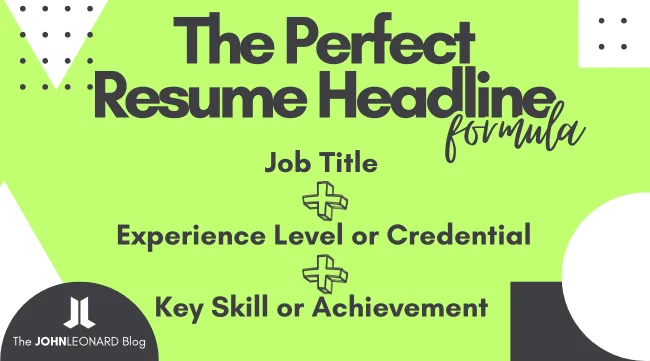
You can combine these elements using a simple formula:
Job Title + Experience Level or Credential + Key Skill or Achievement.
This structure allows you to clearly and quickly communicate your professional focus. Examples using this formula include:
“Marketing Graduate | Social Media Campaigns & Brand Growth,” “Administrative Assistant | Organization & Scheduling Expertise,” and “Software Developer | Python, AI & Cloud Applications.”
This format works well because it provides recruiters with the information they need right away. According to career resources such as Jobscan, using clear keywords in your headline can also help your resume appear in Applicant Tracking Systems (ATS). Many companies use ATS software to scan resumes for relevant skills and job titles before recruiters even review them.
When writing your headline, keep a few best practices in mind.
- Keep it short and clear
- Focus on skills and value rather than personality traits
- Use keywords from the job description to help align your resume with the position you are applying for.
- Most importantly, tailor your headline for each job application to significantly improve your chances of getting noticed
A strong resume headline may seem like a small detail, but it can make a big impact! By clearly highlighting your role, experience, and key skills in one line, you give employers a compelling reason to continue reading your resume and move one step closer to securing the job!