

Ever caught yourself daydreaming about a completely different career? You’re not the only one. A recent Monster survey found that 44% of professionals are applying for roles outside their field, and 20% are actively trying to change careers or industries. A career pivot: a fresh start, a clean slate, new challenges, a change of pace; and it can be one of the best moves you make for both career growth and well-being.
People pivot for better job security, room to grow, improved work-life balance, or relief from burnout. The transition takes more effort than it might seem from the outside, but with the right expectations around time, money, and identity, it’s absolutely worth it. Here’s what to expect, and how to set yourself up for a smooth, successful transition.
The Timeline Reality
Give yourself time to do this right. Start with an honest audit of your skills and experience, and research the industry or role you’re eyeing. Once you’ve landed on a direction, map out how your current skills transfer, and get comfortable talking about that value with confidence.
Mid-career pivots typically take three to 12 months, especially in today’s labor market. That timeline is normal, not a red flag. Moving deliberately means you land somewhere that actually fits, instead of somewhere you’ll want to leave again.
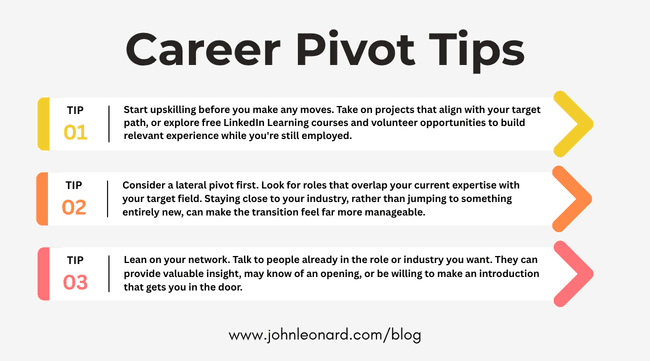
Tip: Start upskilling before you make any moves. Take on projects that align with your target path, or explore free LinkedIn Learning courses and volunteer opportunities to build relevant experience while you’re still employed.
The Financial Impact
A pivot can mean a short-term step back financially, sometimes starting closer to entry-level, sometimes taking a temporary pay cut. It’s worth planning for. Building up a cushion of several months’ expenses beforehand goes a long way toward making the transition feel low-risk instead of stressful.
A few things also reset when you switch employers, so it’s worth factoring them into your planning:
- PTO, often back down to a starting allotment
- Bonuses or incentive pay tied to tenure
- Any seniority-based perks you’ve built up over time
Courses and certifications, like SHRM for HR, Six Sigma for project management, or CompTIA for IT, are a great way to build credibility fast. They’re an investment, but one that can pay off quickly in a new field.
Tip: Consider a lateral pivot first. Look for roles that overlap your current expertise with your target field. Staying close to your industry, rather than jumping to something entirely new, can make the transition feel far more manageable.
The Identity Challenge
Wanting to do something you’re passionate about is fantastic. But make sure your goals are realistic and make sense for your lifestyle. Ask yourself:
- Am I qualified for this?
- Does it align with my long-term goals?
- Where can my strengths add the most value?
- Would I actually enjoy this role day-to-day?
- Is there room to grow, and is the field stable?
As you put yourself out there, you might also run into age bias along the way, not always intentional, but real. A strong resume summary or cover letter can go a long way toward turning “too much experience” into a selling point. Try framing it directly: “After [X] years in [field], I’m bringing that experience into [new field] because…” Owning the story upfront gives hiring managers the context they need, rather than leaving them to guess at it.
This process takes time, and that’s okay. Job hunting right now is genuinely hard, so be patient and kind with yourself along the way. A slower search doesn’t reflect your worth.
Tip: Lean on your network. Talk to people already in the role or industry you want. They can provide valuable insight, may know of an opening, or be willing to make an introduction that gets you in the door.
A career pivot isn’t a decision to rush, but approached with the right expectations around time, money, and identity, it’s one of the most rewarding moves you can make. Do the work, trust the process, and you’ll come out the other side more confident and ready to sell yourself into a great new role.
For personalized job search help, contact our team today!