


Most job seekers spend hours tweaking their resumes when instead they should be improving their job search strategy. Of course, you need a resume that is going to make you stand out and get you that first interview, but building a strong strategy will lead to a much more effective job search.
- Stop Treating Your Resume as the Problem
Too many candidates assume, “I’m not getting interviews because my resume isn’t good enough.” The reality is really more often that:
- They’re applying to jobs they are not qualified for
- They’re competing against hundreds of applicants
- They’re relying entirely on online applications
- They’re doing what everyone else is doing
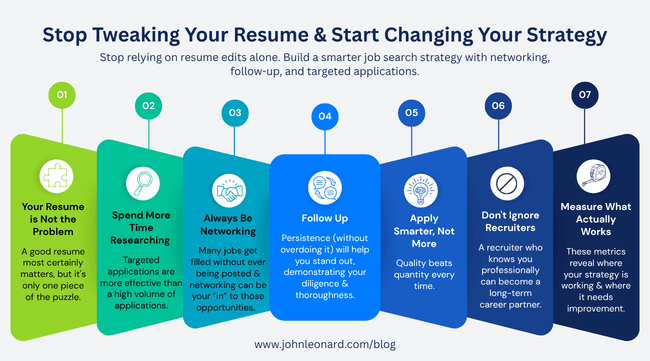
A good resume most certainly matters, but it’s only one piece of the puzzle.
- Spend Less Time Editing and More Time Researching
Instead of rewriting your resume for the umpteenth time:
- Research companies that are growing
- Look for organizations opening new offices
- Follow companies receiving funding
- Expand your search criteria to industries and job titles outside of the obvious where your skill set might be in demand
Targeted applications are more effective than a high volume of applications.
- Always Be Networking
Don’t wait until you are looking for a new job to start your networking. It takes time and effort to build an effective network, one that can help you land that job. And remember, one referral can be worth dozens of applications. Here are some ideas to kick-start your networking:
- Reconnect with people you already know. Reach out to former colleagues, classmates, and friends. They’re often your best source of job leads.
- Ask for advice, not a job. People are more likely to respond when you ask for their insights or career advice rather than directly asking if they’re hiring.
- Be prepared with a 30-second introduction. Clearly explain who you are, what you do, and the type of opportunity you’re looking for.
- Always follow up. Send a brief thank-you message after networking conversations and stay in touch periodically to build solid professional relationships.
Remember: many jobs get filled without ever being posted, and networking can be your “in” to those opportunities.
- Follow Up
Most applicants never follow up after submitting an application. There are multiple effective follow-up methods, including:
- Find the hiring manager or someone with a job similar to the one you are pursuing
- Send a short LinkedIn message
- Follow up after an interview with an email or a call expressing your continued interest
Persistence (without overdoing it) will help you stand out. It will demonstrate to decision makers that you are diligent and thorough in the pursuit of your goals.
- Apply Smarter, Not More
Rather than sending 100 applications, focus on:
- Applying to 10-15 highly relevant positions each week
- Customizing your resume and application where it makes sense
- Writing a thoughtful cover letter when appropriate
- Following up on each application. Yes, I know, more follow-up!
Quality beats quantity every time.
- Don’t Ignore Recruiters
Many professionals wait for recruiters to find them; instead:
- Identify a few recruiters in your field and connect with them
- Keep your LinkedIn current. Make sure your headline, experience, and skills reflect the type of role you are seeking, and let recruiters know you’re open to opportunities
- Respond professionally to recruiters who reach out to you. You may need them someday!
- Keep the relationship fresh and stay in touch
A recruiter who knows you professionally can become a long-term career partner.
- Measure What Actually Works
Instead of obsessing over your resume, measure:
- Applications submitted
- Response rate
- Interviews secured
- Networking conversations
- Referrals
- Recruiter outreach
These metrics reveal where your strategy is working and where it needs improvement.
Key takeaway
A resume gets you considered, but your strategy gets you hired. The most successful job seekers don’t just have strong resumes; they target the right employers, build relationships, follow up consistently, and treat their job search as an ongoing business development effort rather than a numbers game.
For tailored job search help, contact our team!